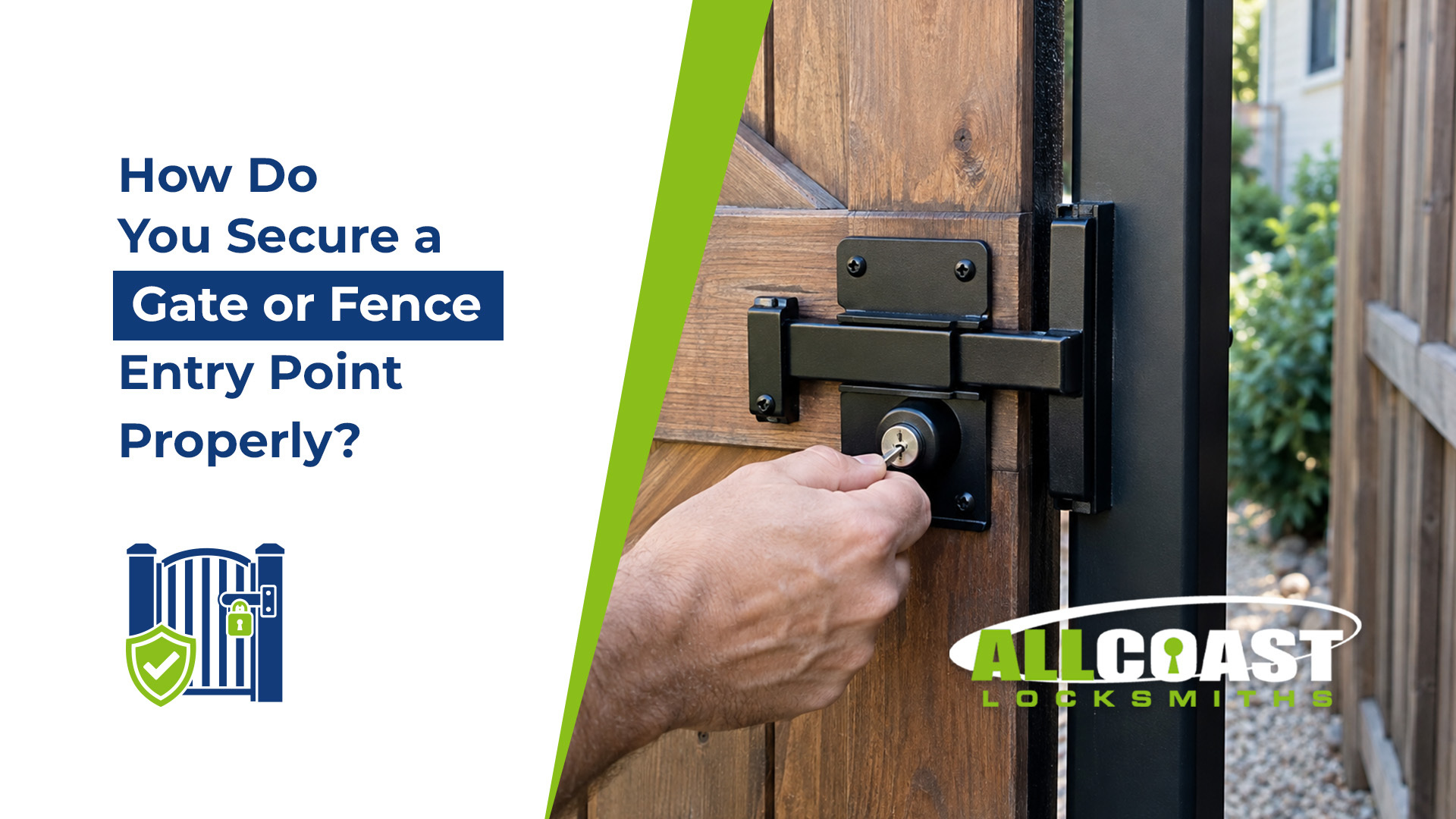
A fence gate is often the first point of entry to a property, and it is frequently the weakest one. So how do you actually secure a fence gate properly? The answer depends on the gate type, what it is protecting, and how much resistance you need it to provide. At a minimum, a gate should have a latch that cannot be reached from the outside, a lock that resists forced entry, and hinges that cannot be simply lifted off. Beyond that, there are practical upgrades that make a real difference to the overall security of your property perimeter, and we cover them here.
Why Gate Security Is Worth Taking Seriously
Most break-ins are opportunistic. An offender will look for the easiest path to your property, and an unsecured or easy to climb gate is a clear signal that the perimeter is not being taken seriously. A gate that swings open with a simple lift of the latch, or one with a padlock that has not been closed, tells an opportunistic intruder that the rest of the property may be equally accessible.
The Queensland Police Service Home Security Guide identifies the external perimeter, including the fence line, as the first layer of a layered security approach. Getting this layer right makes every other layer of security more effective.
The Basic Requirements for a Secure Gate
A properly secured gate needs three things working together. First, a latch or lock that cannot be operated from the outside without a key or code. A simple lever latch with no lock can typically be opened by reaching over or through the gate, which is not a meaningful barrier. Second, a lock that resists forced entry. A light duty padlock or a flimsy latch lock is not sufficient for a perimeter gate that protects the side or rear of a property. Third, hinges that are secured so the gate cannot be lifted off the post. Many standard garden gate hinges can be defeated simply by lifting the gate upward, which is worth checking before anything else.
What Type of Lock Suits Your Gate
The right lock depends on the gate material, the level of security required, and how frequently the gate is used.
For a timber or aluminium side gate that is used regularly, a keyed deadbolt or a quality key lockset mounted on the gate is a practical solution. It provides proper key control and resists forced entry far better than a padlock and hasp setup.
For a gate that is used less frequently, a heavy duty padlock through a solid hasp and staple is effective, provided the hasp is bolted through the gate and post rather than just screwed in. A padlock with a hardened steel shackle and a closed shackle design reduces the risk of bolt cutters being effective.
For pool gates, Queensland law sets specific requirements around self-closing and self-latching mechanisms. The gate must open away from the pool, the latch must be on the pool side, and the gate cannot be able to be opened by a child reaching over or through. If your pool gate does not meet these requirements, it is a legal issue as well as a security one.
Our domestic locksmith team installs gate locks and deadbolts across the Gold Coast and can advise on the right hardware for your specific gate setup.
Hinge Security
Hinge security is overlooked more often than any other aspect of gate security. If the hinges are mounted on the outside of the gate post and the hinge pins are exposed, the gate can sometimes be removed entirely without touching the lock. The fix is either to use security hinges with non-removable pins, or to have the hinges mounted so they face inward and are not accessible from the outside.
For existing gates where the hinge setup cannot easily be changed, hinge bolts or security studs can be fitted to prevent the gate being lifted off even if the pins are accessed.
Lighting and Visibility Around the Gate
A gate that sits in shadow at night is a gift to anyone who wants to take their time working on the lock or hinge without being seen. Sensor lighting positioned to illuminate the gate area is one of the most effective and lowest cost security upgrades you can make.
The Queensland Government home safety guide recommends keeping doors and windows secured and making your property less attractive to opportunistic offenders. Good perimeter lighting is a key part of that, particularly around entry points that are not visible from the street.
Gates That Access the Side or Rear of a Property
Side access gates that lead to the rear of a property deserve particular attention. The rear of a property is typically less visible from the street, quieter, and more sheltered than the front, which makes it a preferred entry point for an opportunistic intruder. A side gate that provides easy access to the back of the property and is secured with only a basic latch is a genuine vulnerability.
For these gates, a key lockset or keyed deadbolt is the right solution. If the gate is timber, it is also worth checking the condition of the timber around the lock and hinges, as rot or damage in these areas can make a quality lock far less effective than it should be.
We Can Help Across the Gold Coast
If you are unsure whether your gate lock is up to scratch, or if you want a lock installed, upgraded, or assessed, our team covers the full Gold Coast region. We work on timber, aluminium, and steel gates and carry a range of suitable locksets and deadbolts to suit different gate types and budgets.
Get in touch with our 24 hour locksmith team and we will get it sorted.