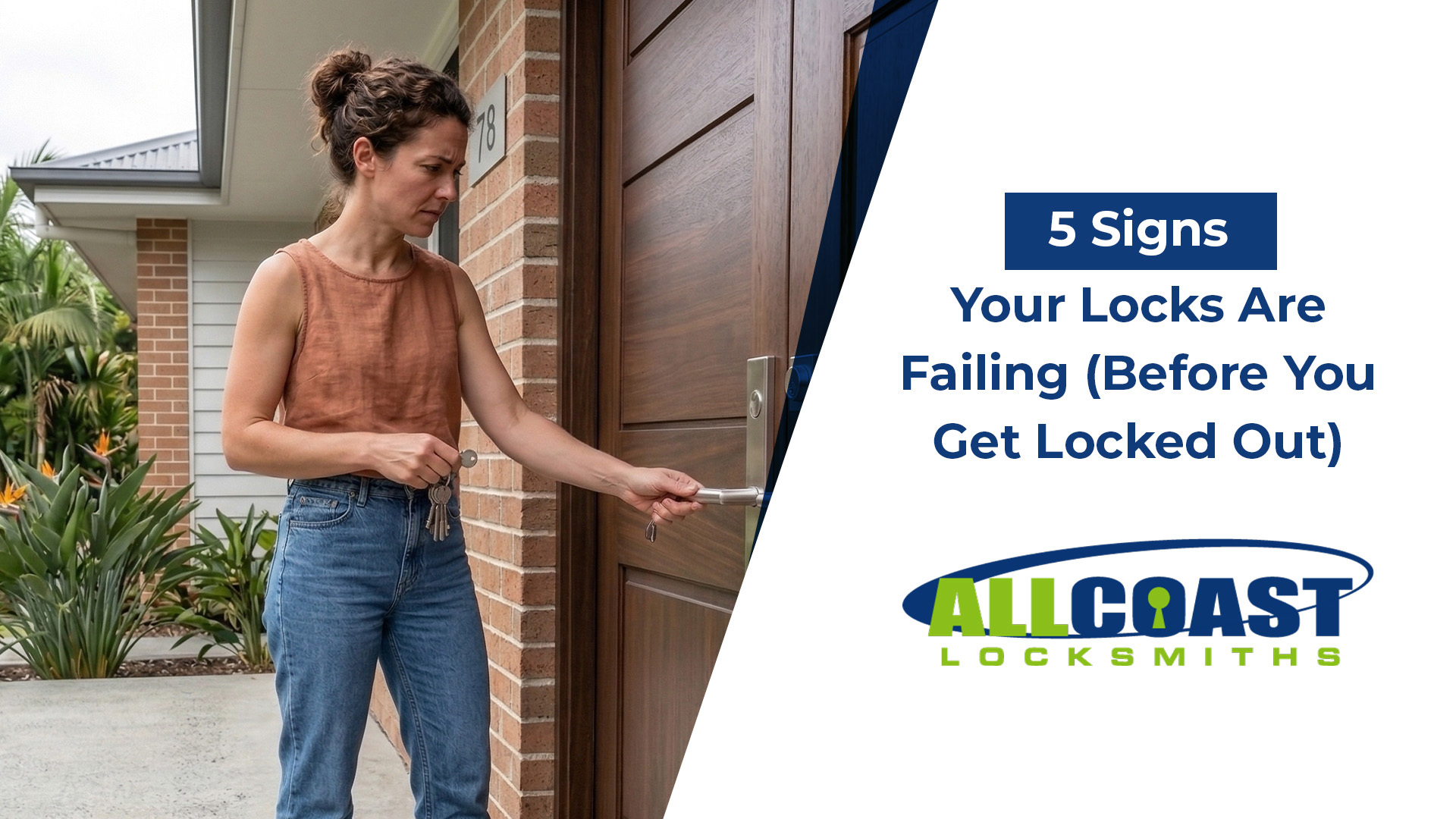
Living on the Gold Coast offers an incredible lifestyle, from the surf at Burleigh to the bustling streets of Surfers Paradise. However, while we enjoy the sun and the sea breeze, our homes are constantly battling the elements. One of the most overlooked victims of our beautiful environment is the humble door lock.
The combination of high humidity and salt air can wreak havoc on metal components. In 2026, as home security technology becomes more sophisticated, the mechanical parts of your locks still remain the front line of your defense. Waiting until your key snaps or the handle won’t turn usually results in an inconvenient emergency call.
By recognising the warning signs early, you can save money and stress. Here are five signs that your locks are failing and why the coastal factor makes maintenance a necessity.
One of the earliest signs of a failing lock is a key that no longer glides in or turns smoothly. You might find yourself jiggling the key or applying extra pressure just to get the bolt to throw.
On the Gold Coast, this is often caused by salt crystallization and internal corrosion. The salt air penetrates the keyway, causing tiny deposits to build up on the pins and springs. Over time, these deposits create friction. If you ignore this, the pins can eventually seize entirely, leaving you standing on your doorstep with a key that won’t budge.
Take a close look at your door hardware. Do you see small tea staining spots, green oxidation, or flaky rust? Because we live in a high moisture environment, the protective coatings on cheaper locksets can wear down quickly.
Once rust is visible on the outside, it is a virtual certainty that the internal mechanics are also degrading. Rust weakens the metal, making the lock easier to bypass for an intruder and more likely to suffer a catastrophic mechanical failure. Professional grade hardware installed by a specialist like All Coast Locksmiths is often designed with better weather resistance to combat this exact issue.
If you insert your key and notice the entire cylinder moves or shifts within the door, you have a problem. This usually indicates that the internal set screws have loosened or that the tailpiece connecting the cylinder to the bolt is wearing out.
A loose lock is a massive security risk. It is much easier for a burglar to torque or pull a loose cylinder than a flush, tight one. Furthermore, if the cylinder shifts too far, it can misalign with the internal throwing mechanism, meaning your key will turn, but the door won’t actually unlock.
Do you have to perform a specific ritual to get your door to lock? Maybe you have to lift the handle upward or pull the door toward you with all your might to get the deadbolt to click into place.
This is a sign of misalignment. On the Coast, our homes often shift slightly due to sandy soil or temperature fluctuations causing timber doors to swell in the humidity. When a lock is misaligned, the bolt puts constant pressure on the strike plate. This friction wears down the lock’s internal components at double the normal rate. Eventually, the mechanism will jam, and no amount of pulling or lifting will get it open.
When you turn your door handle or the internal thumbturn, there should be a crisp, springy resistance. If the handle feels mushy, sags downward, or requires multiple turns to engage the latch, the internal springs are likely failing.
Spring failure is common in older locks or those exposed to heavy salt air. Once those springs lose their tension, the latch may not fully retract or extend. This can lead to a false lock where you think the door is secure, but a simple push could pop it open.
We often talk to clients who are surprised that a lock only five years old is already failing. The reality is that the Gold Coast is a severe environment for hardware. If you live within a few kilometers of the ocean, your locks are essentially being hit with a fine mist of corrosive salt every single day.
Standard hardware found at big box DIY stores is often not rated for coastal conditions. This is why proactive maintenance is so important. A quick professional service can often save a lock through specialized cleaning and lubrication, whereas waiting until a lockout occurs usually means the entire unit must be replaced.
Think of your locks like your car. You wouldn’t wait for the engine to seize before getting an oil change. Calling a locksmith for a check up or to fix a sticky lock during business hours is significantly more affordable than calling for an emergency gain entry at midnight.
When you address these five signs early, you have the luxury of choice. You can choose to rekey, upgrade to a more durable coastal rated lock, or even transition to a smart lock system that eliminates the need for a physical keyway altogether.
If you’ve noticed any of these red flags, don’t wait for the inevitable lockout. At All Coast Locksmiths, we are the great solution for homeowners and businesses across the region who want to stay ahead of the curve.
As a local team, we understand the specific challenges that Gold Coast weather presents. We don’t just fix locks; we provide long term security solutions tailored to our unique environment. Whether you need a simple adjustment, a full house rekey, or an upgrade to high security hardware, we pride ourselves on being the best company you can trust on the Gold Coast.
We offer transparent pricing, rapid response times, and the expertise to ensure your home remains your sanctuary. Visit All Coast Locksmiths to book a security audit or a service call today.